


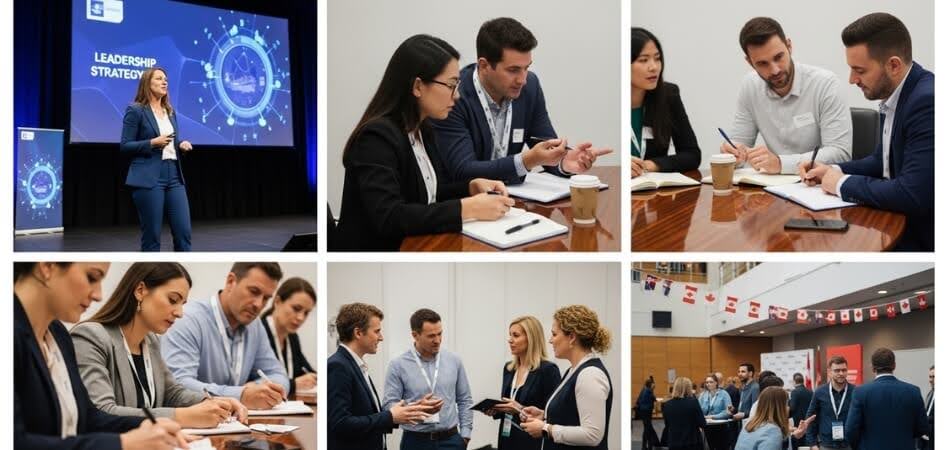

Business professionals constantly seek ways to remain competitive, enhance leadership capabilities, and expand their industry perspectives in today’s fast-changing environment. That’s where management conferences stand out. Understanding the learning and benefits at the conference in Canada reveals how these events combine expert insights, practical case studies, and powerful networking experiences.
Simply put, what professionals can learn from a management conference in Canada includes leadership strategies, modern management practices, industry trends, and practical frameworks that improve decision-making and team performance. These conferences also create valuable peer-learning opportunities that accelerate career growth. Continue reading to explore the key lessons and professional benefits in detail.
What Professionals Can Learn From a Management Conference in Canada?
Professionals attend conferences to gain fresh insights, practical skills, and stronger connections that improve everyday leadership decisions. Understanding what professionals can learn from a management conference in Canada helps managers discover real strategies, modern tools, and industry perspectives. Explore the sections below to uncover valuable lessons and actionable ideas.
Leadership and Team Management Techniques
- Experienced speakers demonstrate clear leadership behaviors that inspire teams, build trust, and encourage consistent performance across departments.
- Real management examples show how leaders motivate employees, improve accountability, and guide teams toward shared organizational goals.
- Workshops teach practical approaches for delegating responsibilities, strengthening morale, and creating productive workplace environments that encourage collaboration.
Strategic Decision-making and Problem Solving
- Experts share proven frameworks that help professionals analyze complex business challenges and make confident strategic decisions quickly.
- Interactive discussions reveal how experienced executives evaluate risks, balance priorities, and choose solutions that support long-term growth.
- Case study sessions explain structured problem-solving approaches that transform uncertainty into practical actions supporting business stability.
Emerging Business and Management Trends
- Industry analysts explain emerging business developments shaping leadership priorities, including technology adoption, workforce transformation, and evolving market competition.
- Expert panels discuss current economic shifts and explain how leaders adapt management strategies to changing global business environments.
- Thought leaders highlight innovative practices organizations use to stay competitive while improving productivity, sustainability, and long-term strategic resilience.
Communication and Collaboration Strategies
- Leadership sessions demonstrate practical communication techniques that help managers present ideas clearly and inspire meaningful workplace dialogue.
- Group discussions reveal how collaboration between departments strengthens project success and encourages shared responsibility across teams.
- Experts explain listening strategies that improve team relationships and reduce misunderstandings while strengthening workplace trust.
Change Management and Organizational Resilience
- Experienced leaders explain how organizations manage change effectively while protecting employee engagement and maintaining operational stability.
- Strategy workshops explore methods leaders use to guide teams through uncertainty without losing focus on long-term business priorities.
- Professionals learn resilience strategies that help organizations recover quickly from disruptions while strengthening internal decision-making systems.
Practical Management Tools and Frameworks
- Speakers introduce structured management models that help leaders track progress, improve productivity, and align teams with clear objectives.
- Expert sessions demonstrate digital management tools that simplify performance measurement and support informed business decision processes.
- Interactive workshops provide practical frameworks that leaders can apply immediately to strengthen operations, planning, and daily management effectiveness.
Networking and Industry Knowledge Exchange
- Professionals share experiences that reveal practical lessons about leadership challenges and successful solutions across different industries.
- For example, during discussions at a management conference Canada, professionals exchange ideas that inspire innovative thinking and collaborative partnerships.
- Meaningful networking conversations help professionals build trusted relationships that support knowledge sharing and long-term career advancement.
Career Development and Professional Growth
- Leadership events encourage professionals to refine career goals while learning from mentors who share valuable industry experience.
- Conference sessions highlight professional development strategies that help managers build confidence and improve long-term leadership potential.
- Exposure to experienced executives motivates professionals to pursue continuous learning while strengthening their personal leadership capabilities.
Why Management Conferences in Canada are Valuable for Professionals?
Management conferences offer professionals a powerful space to learn, connect, and stay ahead in a fast-changing business world. Understanding why management conferences in Canada are valuable for professionals, they help leaders discover practical insights, expert guidance, and new industry perspectives. Explore the sections below to learn how these events support real professional growth.
Key Professional Benefits at a Glance
| Benefit | Professional Impact |
| Expert insights | Stronger leadership decisions |
| Practical workshops | Improved management skills |
| Case study learning | Better problem-solving ability |
| Professional networking | Expanded career opportunities |
| Global perspectives | Broader strategic thinking |
Exposure to Industry Experts and Thought Leaders
Learning directly from experienced leaders is one of the most valuable aspects of management conferences. These events often invite respected executives, consultants, and innovators who share practical leadership insights drawn from real organizational experiences.
Professionals gain perspectives that go beyond textbooks or online training. Experts often discuss current challenges in leadership, market competition, and organizational transformation.
Key Learning Opportunities Include:
- Understanding leadership strategies used by successful executives in complex business environments.
- Learning how experienced leaders approach difficult decisions and organizational challenges.
- Gaining insights into emerging management practices shaping modern workplaces.
These conversations often inspire professionals to rethink leadership approaches and adopt more effective management techniques.
Access to Practical Workshops and Skill-building Sessions
Workshops provide hands-on learning experiences that help professionals strengthen practical management abilities. Instead of passive listening, participants actively practice skills through exercises and group discussions.
These sessions encourage problem-solving, collaboration, and real-time decision-making. Professionals often leave with techniques they can immediately apply in their roles.
Typical workshop focus areas include the following:
| Workshop Area | Skills Professionals Develop |
| Leadership development | Team motivation and accountability |
| Strategic planning | Business decision-making and risk evaluation |
| Communication skills | Presentation and negotiation techniques |
| Innovation sessions | Creative problem-solving and idea generation |
Practical training sessions help professionals build confidence and apply modern leadership strategies in their organizations.
Learning From Real Business Case Studies
Case study discussions help professionals understand how real organizations handle challenges, make decisions, and achieve success. Instead of theoretical lessons, these sessions analyze real situations faced by businesses.
Participants often evaluate strategies used by companies, discuss alternative solutions, and explore outcomes.
Case study learning allows professionals to:
- Examine real leadership decisions and the factors influencing them
- Understand practical solutions used to solve organizational challenges
- Apply lessons learned to similar situations within their own workplaces
This approach helps professionals connect conference insights with everyday leadership responsibilities.
Opportunities for Professional Networking and Collaboration
Networking opportunities allow professionals to connect with peers, mentors, and industry leaders. These conversations often lead to new insights, partnerships, and long-term professional relationships.
Informal discussions between sessions often produce valuable ideas and shared experiences. Many professionals find that collaborative conversations strengthen their understanding of leadership challenges.
Networking benefits include the following:
- Sharing management experiences and learning from professionals across industries.
- Building professional relationships that support career advancement.
- Discovering potential collaborations or partnerships with other organizations.
These interactions create a supportive environment where professionals exchange knowledge and expand their professional networks.
Exposure to Global and Canadian Business Perspectives
Management conferences in Canada often attract professionals from different regions and industries. This diversity exposes participants to global leadership perspectives while also highlighting the realities of Canadian business environments.
Professionals gain insights into international trends, cross-cultural leadership approaches, and local market challenges.
Key perspectives explored at these conferences include the following:
- Global leadership strategies are shaping modern organizations.
- Canadian workplace regulations and management practices.
- Multicultural leadership approaches within diverse teams.
This blend of international and local perspectives helps professionals develop broader strategic thinking and adapt to evolving business environments.
Leadership Skills Professionals Develop at Management Conferences
Management conferences offer a practical environment where professionals sharpen leadership abilities and learn modern management practices. These events highlight real workplace challenges, strategic leadership techniques, and team development strategies. Continue reading to explore the leadership skills professionals strengthen through conference learning experiences.
Effective Team Leadership and Motivation
Strong leadership begins with the ability to guide and motivate teams toward shared goals. At management conferences, experienced leaders often share practical strategies for inspiring employees and building productive work environments.
Professionals learn how effective leadership influences team morale, productivity, and workplace culture.
Key insights professionals gain include:
- Understanding how clear leadership vision helps teams stay focused on goals and maintain strong workplace motivation.
- Learning practical strategies leaders use to inspire employees and encourage consistent performance across departments.
- Discovering methods for recognizing team achievements and building positive work environments that encourage long-term employee commitment.
These lessons help professionals lead teams with confidence while encouraging collaboration and accountability.
Delegation and Accountability Practices
Successful leaders know how to distribute responsibilities effectively. Delegation allows managers to focus on strategic priorities while empowering team members to contribute meaningfully.
Conference sessions often explore how strong delegation practices support productivity and employee growth.
Important delegation practices discussed include:
- Identifying team strengths and assigning responsibilities that align with individual skills and professional development goals.
- Creating clear expectations so employees understand responsibilities, deadlines, and the impact of their contributions.
- Building accountability systems that help teams track progress and maintain consistent performance standards.
These strategies allow leaders to create balanced workloads while maintaining operational efficiency.
Conflict Resolution and Employee Engagement
Workplace disagreements and communication challenges are common in professional environments. Management conferences provide guidance on resolving conflicts while maintaining positive relationships.
Experts often share techniques for handling disagreements constructively and strengthening employee engagement.
Leadership lessons typically focus on:
- Encouraging open communication that allows employees to express concerns without fear of negative consequences.
- Applying structured conflict resolution methods that transform disagreements into productive discussions.
- Developing workplace cultures where employees feel respected, valued, and motivated to contribute ideas.
These approaches help leaders maintain healthy work environments and reduce workplace tension.
Building High-performance Teams
High-performing teams often share strong collaboration, clear objectives, and supportive leadership. Conference speakers frequently discuss how leaders create environments where teams perform at their best. Professionals gain practical ideas that improve teamwork and productivity.
| Team Development Focus | Leadership Insight |
| Clear team goals | Teams perform better when expectations remain transparent and measurable |
| Strong collaboration | Shared responsibilities strengthen cooperation and accountability |
| Continuous learning | Teams improve when leaders encourage feedback and professional development |
Learning how to build high-performance teams helps professionals strengthen organizational results and team satisfaction.
Emotional Intelligence in Leadership
Emotional intelligence plays a vital role in effective leadership. Leaders who understand emotions, both their own and others, communicate more effectively and build stronger relationships.
At many leadership sessions, experts explain how emotional awareness improves decision-making and workplace trust.
Key emotional intelligence practices include:
- Recognizing emotional responses during stressful situations and maintaining calm leadership under pressure.
- Developing empathy so leaders better understand employee needs, motivations, and workplace concerns.
- Using emotional awareness to strengthen communication and build stronger professional relationships.
These skills allow leaders to guide teams with greater understanding, patience, and confidence.
Strategic Thinking and Decision-making Insights
Strategic thinking and decision-making skills help professionals guide organizations toward clear goals and sustainable growth. Conferences often introduce practical leadership methods that strengthen planning, analysis, and problem resolution. The sections below explain how professionals sharpen strategic thinking and decision-making insights through structured learning experiences.
Long-term Business Planning and Strategy
Successful leaders build strong plans that guide organizations through growth, competition, and market uncertainty over many years. Conference speakers explain strategic planning methods that help professionals set priorities, allocate resources carefully, and pursue achievable business goals.
Data-driven Decision Making
Modern organizations rely on reliable data to guide leaders toward smarter decisions and measurable performance improvements. Conference sessions explain practical techniques for analyzing business information, identifying trends, and choosing strategies supported by clear evidence.
Problem-solving Frameworks Used by Executives
Executives often rely on structured thinking models that simplify complex challenges and help leaders identify realistic solutions quickly. Conference discussions introduce practical frameworks professionals use to evaluate options, balance priorities carefully, and implement effective solutions confidently.
Risk Management and Organizational Resilience
Organizations face constant uncertainty, which requires leaders to anticipate threats and protect operational stability. Conference experts explain practical risk management strategies that help professionals prepare organizations for disruptions while maintaining steady performance.
Emerging Trends and Innovations in Modern Management
Modern management keeps changing as technology grows, work styles shift, and companies face new global challenges. Professionals need to understand these trends to lead teams better and stay competitive. The points below explain key innovations shaping leadership, strategy, and workforce development today.
- AI Decision Support: Artificial intelligence tools help managers study large amounts of data and find patterns that guide better business decisions. Leaders use these insights to plan strategies, reduce risks, and improve daily operations across teams.
- Data-Based Planning: Managers use analytics systems to review performance data and guide smarter planning across departments and projects. Access to real-time information helps leaders adjust priorities and react quickly to market changes.
- Digital Transformation: Companies adopt modern technologies that automate tasks, improve efficiency, and simplify communication across departments. These digital systems help organizations work faster while improving productivity and service quality.
- Cloud Collaboration: Cloud platforms allow employees to share files, manage tasks, and communicate easily from different locations. Managers rely on these tools to keep projects organized and teams connected.
- Hybrid Leadership: Hybrid work combines office work and remote work while maintaining productivity and team engagement. Leaders focus on clear communication and trust to manage teams working in different environments.
- Remote Team Culture: Remote leadership encourages managers to create supportive digital spaces where employees stay connected and motivated. Regular meetings and feedback help maintain teamwork and strong relationships.
- Sustainable Leadership: Responsible leaders balance profit with environmental protection and social impact. They include sustainability goals in company strategies to support long-term business success.
Communication and Collaboration Skills Professionals Gain
Professionals strengthen communication and collaboration abilities when they attend leadership-focused events and structured learning environments. These conferences encourage open discussion, shared ideas, and clear messaging across teams. Such environments help professionals understand how strong communication improves teamwork, leadership confidence, and better decision-making.
Cross-department Collaboration
Cross-department collaboration teaches professionals how teams share goals, combine skills, and solve problems together effectively today. Conference discussions encourage leaders to connect departments, improve coordination, and remove barriers that slow teamwork inside organizations.
Stakeholder Communication Strategies
Stakeholder communication strategies help professionals explain ideas clearly while building trust with leaders, partners, and team members. Conference sessions show practical ways managers communicate priorities, manage expectations, and maintain productive relationships with important stakeholders.
Influencing and Negotiation Skills
Influencing and negotiation skills help professionals guide discussions, reach fair agreements, and support balanced decisions during complex situations. Expert speakers demonstrate practical persuasion methods that strengthen professional credibility and encourage cooperative outcomes during challenging negotiations.
Presentation and Executive Communication Skills
Presentation and executive communication skills help professionals deliver clear messages, inspire confidence, and present ideas effectively to leadership. Interactive conference sessions teach structured storytelling methods that help professionals explain strategy, share insights, and influence important organizational decisions.
Practical Tools and Frameworks Shared at Management Conferences
Management conferences help professionals move beyond theory by introducing practical tools that improve leadership, planning, and organizational performance. These events often highlight proven frameworks used by successful leaders across industries. Continue reading to explore the essential management tools professionals discover at these conferences.
Leadership and Productivity Frameworks
Leadership frameworks help professionals guide teams effectively while maintaining productivity and accountability. Conferences often introduce structured models that simplify leadership responsibilities and encourage consistent performance.
These frameworks help leaders align team goals, track progress, and maintain focus on strategic priorities.
Common leadership frameworks discussed include:
- SMART goal framework that helps leaders set clear objectives, measure outcomes, and guide teams toward focused achievements
- Servant leadership model encourages leaders to prioritize team development, trust, and collaboration within organizational environments
- OKR (Objectives and Key Results) framework is used to align individual performance with broader company goals
These approaches help professionals improve leadership effectiveness while strengthening overall team productivity.
Strategic Planning Tools
Strategic planning tools support leaders in making long-term decisions and aligning resources with organizational objectives. Conferences often highlight practical planning methods used by successful organizations.
Professionals learn how structured planning improves clarity, reduces uncertainty, and supports sustainable growth.
Key strategic tools often discussed include:
| Strategic Tool | Purpose |
| SWOT analysis | Evaluates strengths, weaknesses, opportunities, and threats affecting business strategies |
| PESTLE analysis | Assesses political, economic, social, technological, legal, and environmental factors |
| Balanced scorecard | Measures performance across financial, operational, and customer perspectives |
These tools help leaders build strategic plans that align organizational resources with business priorities.
Team Performance Measurement Methods
Effective management requires accurate evaluation of team performance. Conferences frequently introduce modern measurement techniques that help leaders track productivity and identify improvement areas.
These methods allow professionals to monitor progress while maintaining employee engagement.
Common performance measurement approaches include:
- Key performance indicators (KPIs) that track measurable results linked to organizational goals
- 360-degree feedback systems provide performance insights from supervisors, peers, and team members
- Performance dashboards that visualize productivity data and highlight trends across teams
Using structured evaluation tools helps organizations improve accountability and encourage continuous improvement.
Decision-making Models Used in Organizations
Strong decision-making skills are essential for effective leadership. Management conferences often explore models that help professionals evaluate information and choose appropriate actions.
These frameworks guide leaders in analyzing risks, considering alternatives, and selecting strategies that support organizational goals.
Common decision-making models include:
- A rational decision-making model that evaluates available data before selecting the most logical solution
- Cost-benefit analysis is used to compare potential outcomes and determine the most valuable option
- Scenario planning approach that prepares organizations for different possible business conditions
Structured decision-making methods help professionals reduce uncertainty and make informed choices.
Project and Operations Management Techniques
Project and operations management techniques help professionals organize tasks, manage resources, and ensure timely project completion. Conferences frequently introduce tools that improve coordination and operational efficiency.
These methods enable teams to manage complex workflows while maintaining productivity.
Important techniques discussed include:
- Agile management approach that encourages flexibility, collaboration, and continuous improvement in project execution
- Lean management principles designed to reduce waste while maximizing operational value and efficiency
- Gantt charts and project tracking systems that help managers monitor timelines and coordinate team activities
These practical techniques allow professionals to manage projects more effectively while improving organizational performance.
Networking as a Learning Opportunity
Networking at management conferences goes far beyond exchanging business cards. It creates meaningful learning experiences where professionals share ideas, discuss real challenges, and explore practical solutions together. Conversations often spark new perspectives and insights. Continue reading to discover how different professionals benefit from networking-driven learning.

Managers and Team Leaders
Managers and team leaders often use networking opportunities to exchange practical leadership experiences. These discussions help them understand how other leaders manage teams, handle challenges, and improve workplace productivity.
- Managers learn practical team leadership methods by discussing real workplace challenges with experienced peers from different industries.
- Conversations with fellow leaders reveal useful approaches for motivating employees, managing conflicts, and strengthening team collaboration.
- Informal discussions allow managers to compare leadership strategies and discover new ways to improve team performance.
Executives and Senior Decision Makers
Executives often view networking as a strategic learning opportunity. Engaging with other senior leaders helps them explore innovative ideas, industry shifts, and leadership strategies shaping modern organizations.
- Senior executives exchange strategic insights that reveal emerging industry trends and innovative management practices influencing business growth.
- Conversations between decision makers encourage discussion about market challenges, leadership priorities, and long-term organizational strategies.
- Networking sessions help executives explore partnerships and collaborative opportunities that support organizational expansion and innovation.
HR and People Management Professionals
HR professionals benefit from networking by learning how organizations manage people, culture, and employee engagement in evolving workplace environments.
- HR professionals share ideas about talent development, employee engagement strategies, and workplace culture improvement across organizations.
- Discussions with industry peers reveal new approaches for recruitment, retention, and leadership development initiatives within companies.
- Networking conversations help HR leaders understand how different organizations address workforce challenges and employee expectations.
Entrepreneurs and Business Owners
Entrepreneurs often attend conferences to connect with other founders and business leaders. These interactions provide valuable insights into managing growth, solving operational challenges, and identifying opportunities.
- Entrepreneurs learn business growth strategies by discussing startup challenges and solutions with experienced founders and investors.
- Conversations with industry professionals help business owners identify partnership opportunities and potential collaborations.
- Networking sessions expose entrepreneurs to innovative ideas that inspire new approaches to leadership and market expansion.
Early-career Professionals and Emerging Leaders
For emerging leaders, networking provides a powerful learning environment where they gain guidance from experienced professionals and develop career confidence.
- Early-career professionals gain valuable mentorship insights by interacting with experienced leaders who share real industry experiences.
- Conversations with professionals across industries broaden perspectives and reveal diverse career development pathways.
- Networking experiences help emerging leaders build confidence while strengthening communication and relationship-building skills.
What Different Professionals Can Learn at a Management Conference?
Management conferences offer professionals a space to learn practical leadership ideas, explore new strategies, and build stronger industry connections. These events bring people from many roles together, helping them exchange experiences and discover useful approaches that improve leadership confidence, teamwork, and decision-making in modern organizations. These are the professionals who learn at these conferences.
Managers and Team Leaders
Managers strengthen daily leadership skills while learning practical methods for motivating teams and improving workplace communication effectively. They explore delegation strategies, conflict resolution techniques, and performance coaching methods that support productive teams and stronger collaboration.
Executives and Senior Decision Makers
Executives discover strategic insights that guide long-term business direction and improve leadership impact across complex organizations. They discuss market changes, leadership challenges, and growth strategies with peers who manage large organizations and diverse teams.
HR and People Management Professionals
HR professionals learn practical workforce strategies that improve recruitment processes, employee engagement, and long-term talent development initiatives. They discuss workplace culture, leadership training, and retention methods that help organizations support employees and build strong teams.
Entrepreneurs and Business Owners
Entrepreneurs explore business growth ideas and practical leadership approaches that help them manage challenges in competitive markets. They exchange experiences with other founders, learning financial planning, market expansion strategies, and customer-focused leadership practices.
Early-career Professionals and Emerging Leaders
Emerging leaders build confidence while learning workplace communication skills and professional development strategies from experienced industry mentors. They explore career pathways, leadership expectations, and practical management knowledge that helps them grow within modern organizations.
Unique Value of Attending a Management Conference in Canada
Management conferences in Canada offer professionals a unique learning environment shaped by cultural diversity, global business influence, and strong governance standards. These events combine international insights with practical regional knowledge. Continue reading to learn the distinctive advantages professionals gain when attending conferences in Canada.
Exposure to Multicultural Leadership Perspectives
Canada’s diverse professional environment allows conference participants to explore leadership styles shaped by different cultural and organizational experiences. This exposure helps professionals develop adaptable leadership approaches suited for diverse workplaces.
- Multicultural discussions reveal how leaders guide diverse teams while respecting different perspectives, communication styles, and workplace expectations.
- Professionals learn inclusive leadership approaches that encourage collaboration, fairness, and stronger engagement among employees from various backgrounds.
- Exposure to diverse management viewpoints helps leaders build adaptable strategies that improve teamwork and organizational culture.
Learning From North American and Global Markets
Management conferences in Canada often attract speakers and professionals from multiple countries. This global participation allows attendees to understand how different markets operate and how organizations respond to global challenges.
- Industry experts share insights about North American market dynamics and strategies organizations use to remain competitive.
- International speakers explain business innovations and leadership practices shaping organizations across global industries.
- Cross-market discussions help professionals understand how global trends influence strategy, leadership, and business growth.
Understanding Canadian Workplace Policies and Governance
Canada’s professional environment is known for strong workplace standards and transparent governance practices. Conferences often include sessions that explain these frameworks and their impact on organizational leadership.
- Experts explain Canadian workplace regulations that influence leadership practices, employee rights, and organizational responsibilities.
- Governance discussions highlight ethical decision-making approaches that support accountability and sustainable organizational leadership.
- Professionals gain awareness of policy frameworks that shape workplace culture and responsible business management in Canada.
Networking With International Professionals
Management conferences in Canada frequently bring together professionals from different regions, industries, and leadership backgrounds. This diversity creates valuable opportunities for global knowledge exchange.
- International networking allows professionals to exchange insights about leadership challenges across different markets and industries.
- Conversations with global professionals introduce innovative ideas and perspectives that inspire new management approaches.
- Collaborative discussions often lead to long-term professional relationships that support future partnerships and career opportunities.
How Professionals Can Apply What They Learn After the Conference?
Attending a conference brings valuable insights, but the real impact appears when professionals apply those lessons in their daily work. Turning knowledge into action helps organizations benefit from new ideas, leadership strategies, and practical tools. The sections below show simple ways professionals transform conference learning into meaningful results.
Turning Conference Insights Into Actionable Strategies
Professionals should review their notes and identify ideas that align with their current projects and organizational goals. Prioritizing key insights helps convert conference discussions into clear action plans.
| Action Step | Purpose |
| Review key notes and session highlights | Identify valuable ideas worth implementing |
| Select two or three practical strategies | Focus on manageable improvements |
| Create a short action plan | Translate insights into clear workplace actions |
By focusing on a few practical improvements, professionals can test new strategies without overwhelming their teams.
Sharing Learnings With Teams and Organizations
Sharing knowledge helps organizations benefit from conference insights while encouraging team collaboration. Professionals often organize short meetings or presentations to explain important ideas they discovered during the event.
Ways to share conference knowledge effectively:
- Present key insights and practical lessons during team meetings.
- Create simple summaries highlighting useful strategies discussed at the conference.
- Encourage team discussions about how new ideas could improve current processes.
When teams participate in these discussions, they often generate additional ideas that strengthen implementation.
Implementing New Leadership Practices
Leadership conferences often introduce modern management approaches that improve workplace productivity and employee engagement. Professionals should begin applying these ideas gradually while observing how teams respond.
Examples of leadership practices professionals can implement include:
| Leadership Practice | Workplace Impact |
| Encouraging open communication | Builds stronger team trust |
| Setting clearer goals and expectations | Improves accountability |
| Practicing active listening | Strengthens employee relationships |
Small leadership changes can significantly influence team motivation and workplace culture.
Maintaining Connections and Professional Networks
Networking connections formed during conferences can become valuable long-term professional relationships. Maintaining these connections helps professionals continue exchanging ideas and learning from peers.
Simple ways to maintain professional relationships include:
- Connecting with peers on professional platforms like LinkedIn.
- Scheduling occasional virtual meetings to discuss industry developments.
- Sharing useful resources or articles that may interest colleagues.
Strong networks often lead to collaboration opportunities and ongoing professional support.
Continuous Learning After the Event
Professional growth does not end when the conference finishes. Successful professionals continue exploring topics discussed during the event to deepen their understanding.
| Learning Activity | Benefit |
| Reading related industry reports | Expands knowledge of key topics |
| Following expert speakers online | Keeps professionals updated on trends |
| Attending follow-up webinars | Reinforces conference insights |
Continuous learning ensures that conference insights remain relevant and contribute to long-term professional development.
Final Thoughts
Management conferences offer more than presentations; they create spaces where professionals gain ideas, skills, and valuable industry connections. Understanding what professionals can learn from a management conference in Canada highlights how these events build leadership knowledge, strengthen decision-making, and introduce practical strategies that professionals can apply in real workplace situations.
By learning from experts, engaging in discussions, and building strong professional networks, attendees return with insights that support long-term career growth. When professionals actively apply these lessons, the benefits of attending a management conference in Canada become clear. Keep exploring these opportunities to strengthen your leadership journey.
