


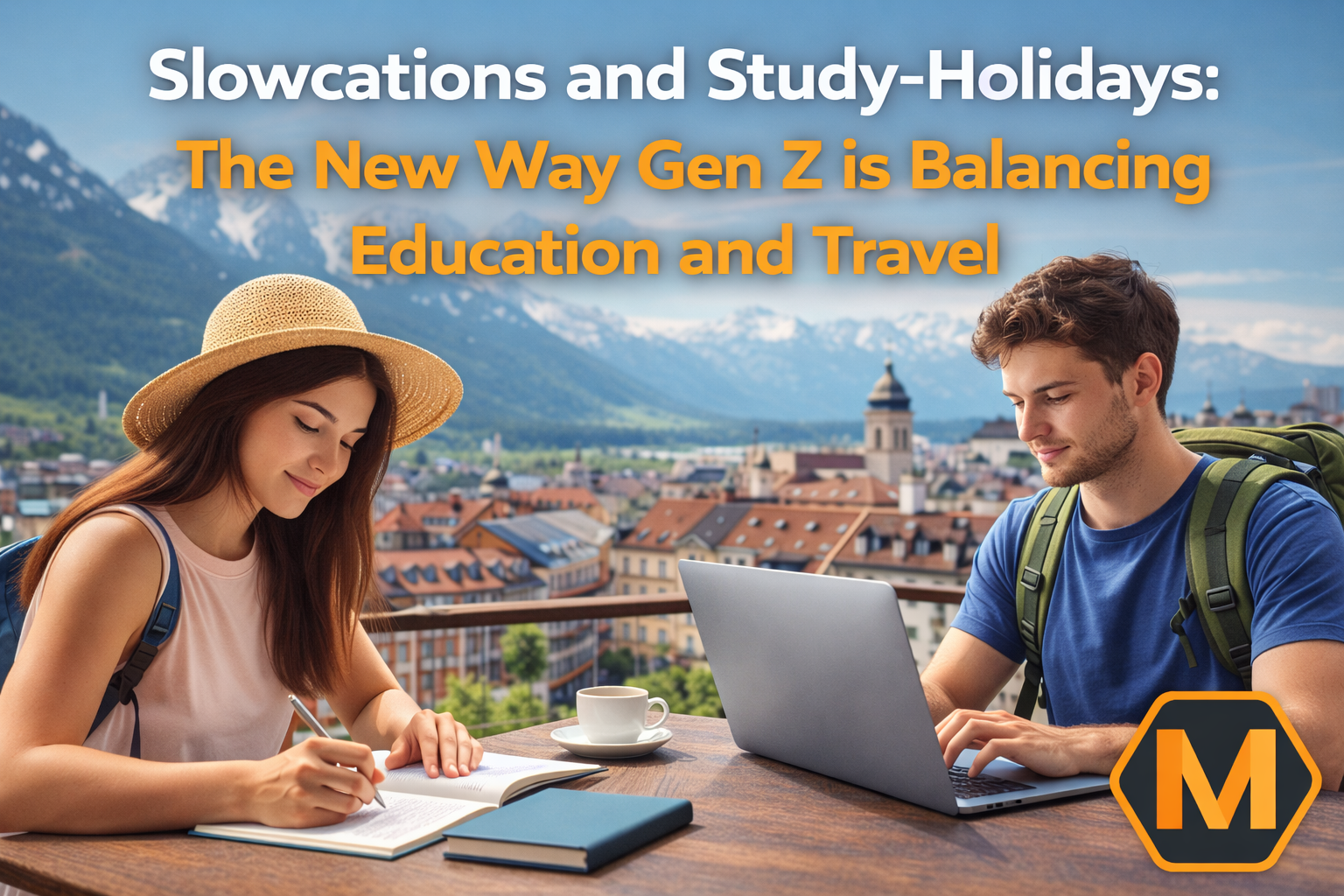
The travel landscape in 2026 has undergone a radical transformation. Gone are the days of “10 countries in 10 days” itineraries that leave you more exhausted than when you left home. Entering the spotlight is the slowcation—a travel philosophy centered on depth, intentionality, and recovery. For Gen Z, this isn’t just a vacation; it’s a lifestyle adjustment. As digital natives who can study from a beach in Bali or a quiet library in Budapest, the traditional boundaries between “term time” and “holiday time” have blurred into a new phenomenon: the study-holiday.
Balancing a full-time degree with a desire to see the world requires more than just a laptop and a passport; it requires a strategic approach to productivity. Many students are finding that they can immerse themselves in new cultures without falling behind by using smart outsourcing. For instance, securing professional assignment help from trusted platforms like myassignmenthelp has become a standard part of the modern student’s travel kit, allowing them to explore hidden gems in Kyoto or Lisbon while ensuring their academic credits remain on track. This blend of experiential learning and academic support is exactly why the slowcation trend is exploding among the “laptop lifestyle” generation. It’s no longer about escaping your life; it’s about taking your life somewhere better.
The Cultural Shift: Why “Slow” is the New Fast
The “Slow Movement” started with food, then moved to fashion, and has now firmly planted its roots in travel and education. Gen Z, often criticized for having short attention spans, is actually leading a rebellion against “hustle culture.” They have realized that rushing through a city to take a selfie for Instagram provides zero long-term “brain wealth.”
By choosing a slowcation—defined as staying in one location for a minimum of three weeks—students can actually engage with the local community. They learn the nuances of a neighborhood, the best time to visit the local market, and the quietest corners of a city park. This stability is what makes a study-holiday possible. If you are constantly on a train or a plane, your brain is in “survival mode.” If you are settled into a charming apartment in Prague for a month, your brain can enter “focus mode.”
Comparing Travel Styles: 2020 vs. 2026
To understand why this is ranking so high on Google trends, we have to look at the data. The following table highlights the shift in student travel behavior over the last few years.
| Feature | The Old “Backpacker” Way (2020) | The New “Slowcation” Way (2026) |
| Duration per City | 2–3 Days | 21–30 Days |
| Primary Goal | Sightseeing & Nightlife | Cultural Immersion & Study |
| Accommodation | Crowded Hostels | Monthly Apartment Rentals/Co-living |
| Work/Study Style | “I’ll do it when I get home” | Integrated Daily “Deep Work” Blocks |
| Tech Usage | Social Media & Maps | AI Productivity Tools & Cloud Research |
| Academic Impact | High Stress/Missed Deadlines | Managed Growth & Consistent GPA |
The “Academic Nomad” Ecosystem
In 2026, the global workforce prizes adaptability and cultural intelligence as much as a degree. Gen Z has realized that sitting in a cramped dorm room for three years isn’t the only way to get an education. By choosing slowcations, students are essentially building their own “global campus.”
The ecosystem of the academic nomad relies on three pillars:
- Infrastructure: High-speed Wi-Fi is now a human right in the eyes of Gen Z.
- Community: Platforms like NomadList or StudyStream allow students to find “study-pods” in whatever city they land in.
- Outsourcing: Knowing when to delegate. No one can do it all. The most successful traveling students are those who recognize when a technical paper or a complex dissertation requires an expert’s touch.
High-Intensity Productivity: Survival of the Smartest
The biggest challenge of a study-holiday is the sudden “deadline panic.” You might spend four days hiking in the Scottish Highlands or exploring the fjords of Norway, only to realize you have a major paper due on Monday morning. This is where high-intensity productivity techniques come into play. When the clock is ticking and the pressure is on, many students look for guides on how to finish a 2000-word assignment in 24 hours to manage these tight turnarounds without sacrificing the quality of their travel experience.
1. The 90-Minute Sprint Method
Science shows that the human brain can only maintain peak focus for about 90 minutes. Students on slowcations use this to their advantage. They wake up early, do two 90-minute “sprints” on their university project, and are done by 11:00 AM. This leaves the rest of the day for exploring.
2. Digital Minimalism
To rank as a top-tier student while traveling, you have to kill the distractions. Successful slowcationers use app blockers to ensure that while they are in “study mode,” they aren’t being tempted by TikTok or travel vlogs. They treat their education like a job so they can treat their travel like an adventure.
3. Asynchronous Learning
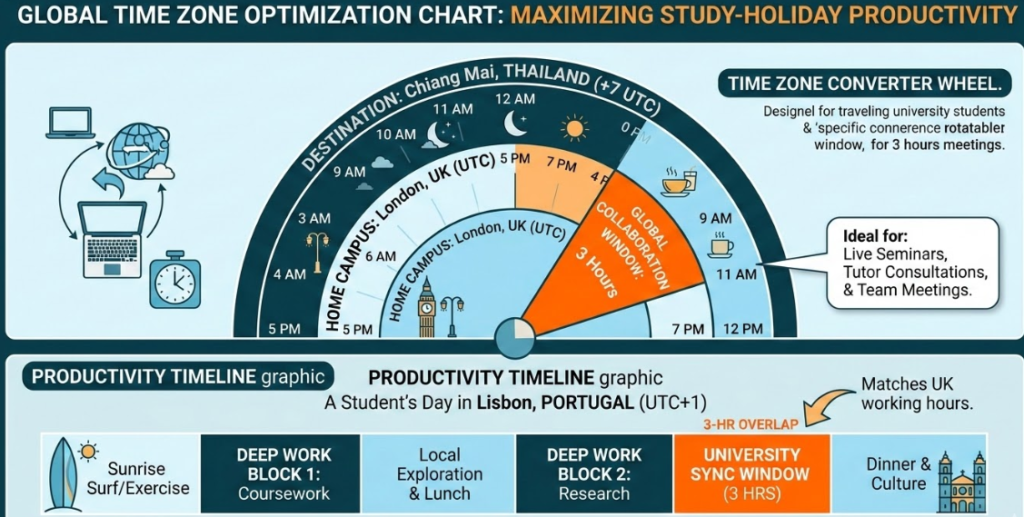
Modern universities have largely moved to recorded lectures. This is the “secret sauce” of the study-holiday. A student can watch a lecture at 2:00 AM in Tokyo, which is 5:00 PM in London. This flexibility allows students to align their study time with their natural “circadian rhythms” rather than a rigid, outdated school bell.
Mental Health and the “Restorative” Journey
The move toward slowcations isn’t just about grades or travel photos; it’s about mental health. The traditional university experience is often a pressure cooker of social anxiety and academic stress. Gen Z is finding that “changing their scenery” is a powerful form of therapy.
Being in a new environment stimulates the brain to produce dopamine and neuroplasticity. When you are learning about Roman history while actually standing in the Roman Forum, the information sticks. It isn’t just a chore; it’s an experience. This “contextual learning” is proving to be more effective than traditional rote memorization in a library.
Establishing a “Basecamp”
The key to a successful slowcation is the “Basecamp” strategy. Instead of moving every few days, you pick one city with a great library system. For example:
- Lisbon, Portugal: Known for its “Digital Nomad” visas and incredible co-working cafes.
- Chiang Mai, Thailand: The unofficial world capital of remote work, offering incredibly low living costs.
- Berlin, Germany: For those who want deep history and a gritty, creative atmosphere to fuel their thesis writing.
By staying put, you reduce “decision fatigue.” You don’t have to figure out where to eat every night or how the bus system works every morning. Once the “survival” tasks are automated, your brain is free to focus on your 5,000-word dissertation or your final year capstone project.
How to Fund Your Study-Holiday
Many people assume that traveling for a month is more expensive than staying at home. In 2026, the opposite is often true. Through “geo-arbitrage,” students from the UK, US, or Australia can live in Eastern Europe or Southeast Asia for a fraction of the cost of their home city.
- Rent: A monthly Airbnb or local sublet is often cheaper than a weekly hostel rate.
- Food: Eating at local markets is healthier and more affordable than university meal plans.
- Transport: Slowcationers walk or bike, saving hundreds on flights and trains.
The Role of AI and Professional Support
We cannot discuss 2026 education without mentioning AI. However, Gen Z has learned that AI has its limits—it often hallucinates and lacks the “human touch” required for high-level academic marking rubrics. This is why human-led support services remain the gold standard. Whether it’s getting a second pair of eyes on a methodology section or ensuring that a bibliography is perfectly formatted in Harvard style, the human element is what bridges the gap between a “pass” and a “first-class” grade.
Final Thoughts: The World is Your Campus
As we move further into 2026, the idea that you must be stationary to be a “good student” is fading. The success of the slowcation proves that with the right tools, a bit of discipline, and a reliable support network, the world truly is your campus. Whether you are writing a thesis on a train across Europe or finishing an essay in a beach hut in Mexico, the goal remains the same: to grow as a person while you grow as a professional.
The study-holiday is more than a trend; it is the future of how we learn. It recognizes that humans are not meant to be caged in lecture halls for years at a time. We are meant to explore, to question, and to experience. By slowing down, we actually learn faster. By traveling further, we find ourselves sooner.
Frequently Asked Questions
What exactly defines a “slowcation” compared to a normal holiday?
Unlike traditional trips that focus on visiting as many landmarks as possible in a short window, this approach emphasizes staying in one location for several weeks. The goal is to establish a local routine, reduce travel fatigue, and create a stable environment that allows for both relaxation and productive focus.
How do students maintain high grades while traveling internationally?
Success lies in “asynchronous” scheduling. By leveraging time zone differences and dedicated deep-work blocks, students can complete their university requirements during quiet hours or transit days, leaving peak daylight hours free for cultural exploration and local experiences.
Are study-holidays more expensive than staying at a university campus?
Not necessarily. Through a strategy called geo-arbitrage, many choose destinations where the cost of living is significantly lower than their home country. By booking long-term stays and eating like a local, the total monthly spend can often be less than maintaining a traditional student lifestyle in a major city.
What is the best way to handle urgent deadlines while off the grid?
Preparation is key. Experienced travelers map out their major milestones before departing and use offline productivity tools to work during flights or in remote areas. Having a reliable support network and a clear understanding of local connectivity ensures that unexpected tasks don’t disrupt the journey.
About The Author
Harrison Walker is a dedicated academic consultant and contributing writer at myassignmenthelp. With a passion for modern pedagogy and global travel, Harrison explores the intersection of digital nomadism and higher education, helping students navigate the complexities of university life in an increasingly mobile world.
